
Living Values and HumanEquality
By Robert L. Humphrey and Jack E. Hoban

The premise of the Living Values philosophy is that the Life Value is man's singularly most important value. Are all lives equal? Perhaps we should ask: All men (and women), are they really created equal? Perhaps the best way to answer a question about the equality concept is to relate this true story. I remember first hearing this story as a graduate student in a class taught by Professor Robert L. Humphrey. Professor Humphrey, on contract with the US State Department, was charged with stopping "Anti-Americanism" overseas in a poor allied country during the Cold War. The implications of this story are of clear importance to this day. We call it:
The "Hunting Story"
After the war America was the undisputed leader of the world. For a while everyone loved us, even our former enemies. But soon people began to resent us due to our superior attitudes. We Americans thought that was unjustified and ungrateful. In one particular country, the unrest was beginning to have strategic implications during that delicate time of detente. Dr. Humphrey's job was to find a solution.
The basic problem was that the Americans working in that poor ally country thought that the local people were smelly, ignorant, violent, dishonest and lazy and let them know it. No matter what he did, Dr. Humphrey couldn't stop the negative talk; partially because some of it was true! As a result, the local people wanted the Americans to go home.
One day, as a diversion, Humphrey decided to go hunting for wild boar with some people from the American embassy. They took a truck from the motor pool and headed out to the boondocks, stopping at a village to hire some local men to beat the brush and act as guides.
This village was very poor. The huts were made of mud and there was no electricity or running water. The streets were unpaved dirt and the whole village smelled. Flies abounded. The men looked surly and wore dirty clothes. The women covered their faces, and the children had runny noses and were dressed in rags.
It wasn't long before one American in the truck said, "This place stinks." Another said, "These people live just like animals." Finally, a young air force man said, "Yeah, they got nothin' to live for; they may as well be dead."
What could you say? It seemed true enough.
But just then, an old sergeant in the truck spoke up. He was the quiet type who never said much. In fact, except for his uniform, he kind of reminded you of one of the tough men in the village. He looked at the young airman and said, "You think they got nothin' to live for, do you? Well, if you are so sure, why don't you just take my knife, jump down off the back of this truck, and go try to kill one of them?"
There was dead silence in the truck. Humphrey was amazed. It was the first time that anyone had said anything that had actually silenced the negative talk about these local people. The sergeant went on to say, "I don't know either why they value their lives so much. Maybe it's those snotty nosed kids, or the women in the pantaloons. But whatever it is, they care about their lives and the lives of their loved ones, same as we Americans do. And if we don't stop talking bad about them, they will kick us out of this country!"
Humphrey asked him what we Americans, with all our wealth, could do to prove our belief in the peasants' equality despite their destitution? The Tennessee sergeant answered easily, "You got to be brave enough to jump off the back of this truck, knee deep in the mud and sheep dung. You got to be brave enough to walk through this village with a smile on your face. And when you see the smelliest, scariest looking peasant, you got to be able to look him in the face and let him know, just with your eyes, that you know he is a man who hurts like you do, and hopes like you do, and wants for his kids just like we all do. It is that way or we lose."
This story affects most Americans. We sympathize with those poor villagers. Maybe it is because we are natural "under-dog" lovers. Remember, our own revolutionary war against the British started because they looked down on us. Recall this popular motto from that time: "Don't tread on me." It was on our flag.
But the point of the story, according to Humphrey, is this: Beneath our culture, beneath the fine clothes or the dirty rags, beneath the color of our skin, we all love life, and we all hurt sometimes, and we all want for our children. My life, and the life of my loved ones, is as important to me as yours are to you. This is the Life Value, and this universal value defines our Human Equality. If you can accept the fact of Human Equality, not just others', but your own, you have taken the first step toward accepting the Life Value, which is really just choosing to live life according to your deepest human nature. And human nature is deeper than economics, behaviors, and cultures.
Understanding human nature gives us the insight that cultural values--what we do to live, or how we live--can be relative, but that the Life Value itself is not. And, since we are all equal, we would pretty much act the same way as those "different" people if we had to live in their environment.
Notice, also, exactly what that old Sergeant said. He said: "I don't know either why they value their lives so much. Maybe it's those snotty nosed kids, or the women in the pantaloons." The Life Value is a dual one: self and others.
One last thing about warriorship. The purpose of the training, especially the physical training, is to help develop in the practitioner physical/moral courage. Could you do as that Sergeant said? Could you jump down off the "back of the truck?" Today, when you walk through the mall, or sit in the subway, or even pass through the scary part of town, are you confident and secure enough in your values and skills, to project your acknowledgment of human equality into the eyes of everyone you meet? Is everyone in your presence safer, does everyone in need have a friend, because you are there?
© 2021 Living Values. All Rights Reserved.
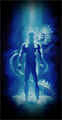
Warrior Painting By Gregory Manchess